
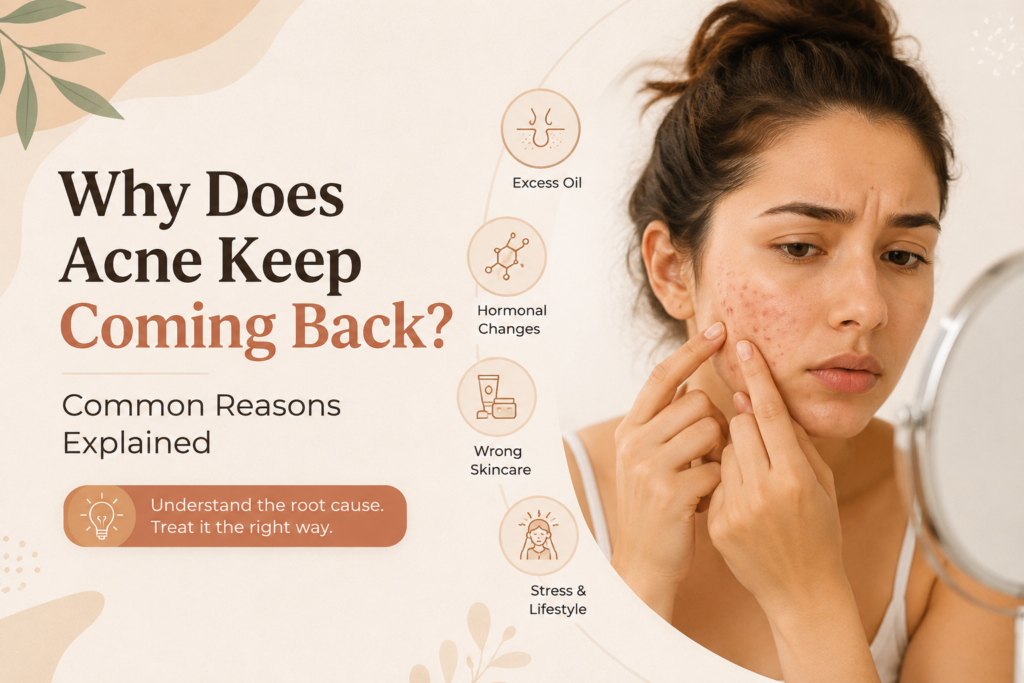
Acne is frustrating, but recurring acne is even worse. You treat one pimple, it dries out, the skin starts looking better, and suddenly another breakout appears in the same area or a new spot. This cycle can make you feel like your skincare is useless, your skin is bad, or nothing works permanently.
But here is the truth: acne usually keeps coming back because the root cause is still active under the skin. Most people only treat the visible pimple, not the reason it keeps forming. Acne happens when pores get blocked with oil, dead skin cells, bacteria, and inflammation. It can also be influenced by hormones, stress, skincare products, diet patterns, lifestyle, and genetics. Mayo Clinic explains that acne can be persistent, where one pimple heals while another appears.
So, why does acne keep coming back? Let’s break it down properly.
Struggling with recurring acne? Consult an expert today. Book a consultation.
1. You Are Treating Pimples, Not Acne
This is the biggest mistake.
A pimple is only the final result. Acne starts before you can even see it. Inside the pore, excess oil mixes with dead skin cells. That blockage can turn into whiteheads, blackheads, painful pimples, or cystic acne. If you only use spot treatment after the pimple appears, you are late.
Real acne control means preventing new clogged pores from forming. That usually needs a consistent routine with ingredients that help reduce clogged pores, oil buildup, bacteria, and inflammation. NIAMS explains that acne treatment aims to heal existing lesions, stop new ones from forming, and prevent scarring.
Simple example:
Using spot treatment is like cleaning water from the floor while the tap is still open. You need to fix the tap, not just wipe the floor.
2. Your Skincare Routine Is Too Harsh
Many people with acne start attacking their skin. They wash their face five times a day, scrub hard, use strong actives daily, apply lemon, toothpaste, baking soda, or random home remedies. This usually makes acne worse.
Harsh skincare damages the skin barrier. Once the barrier is weak, your skin becomes irritated, dry, oily, sensitive, and more reactive. Then even normal products start burning or causing bumps.
Acne-prone skin does not need punishment. It needs control.
A better routine is usually simple:
- Cleanser, acne treatment, moisturizer, and sunscreen.
- That’s it. Not ten products. Not daily scrubbing. Not random DIY experiments.
3. Hormones Are Still Triggering Oil Production
If acne comes back around your jawline, chin, lower cheeks, or before periods, hormones may be involved. Hormonal acne is often linked with excess sebum production, which can clog pores and lead to breakouts. Cleveland Clinic notes that hormonal acne can appear in adulthood and can range from whiteheads to painful cysts.
This is why many people say, “My acne comes back every month.”
That is not random. It may be your hormonal cycle.
Hormonal acne can be stubborn because skincare alone may not fully control the internal trigger. In such cases, dermatologist-guided treatment becomes important. You may need proper evaluation instead of switching face washes every week.
4. You Stop Treatment Too Early
Acne treatment does not work like a painkiller. You cannot apply something for three days and expect long-term clear skin.
Many acne treatments take weeks to show visible improvement. Some people quit early because they think the product is not working. Others stop as soon as acne clears, and then the breakouts return.
This is a common reason acne keeps coming back.
The skin needs maintenance. Once acne is controlled, you still need a basic routine to prevent clogged pores again. The American Academy of Dermatology lists treatments like azelaic acid that can help open clogged pores, act on acne-causing bacteria, and reduce inflammation.
Stopping treatment suddenly is like stopping gym after one week because your body looked slightly better. The result will not last.
5. Your Products May Be Clogging Your Pores
Your acne may not be from “dirty skin.” It may be from the products you apply daily.
Heavy moisturizers, thick sunscreens, oily hair serums, comedogenic makeup, beard oils, and certain creams can block pores. If your acne appears mostly on the forehead, hairline, cheeks, or jawline, check your product usage.
Common triggers can include:
- Hair oil touching the forehead
- Heavy foundation
- Sleeping with makeup
- Thick sunscreen not suitable for acne-prone skin
- Oily creams used at night
- Beard products near the jawline
Choose products labeled non-comedogenic, lightweight, and suitable for acne-prone skin. Also, remove sunscreen and makeup properly at night.
6. You Keep Touching, Picking, or Popping Pimples
This habit is damaging your skin more than you think.
Popping pimples can push inflammation deeper, increase swelling, spread bacteria, and raise the risk of acne marks or scars. Acne scars are much harder to treat than active acne.
If you keep touching your face during the day, your hands transfer oil, sweat, dirt, and bacteria to the skin. This does not mean acne is caused by poor hygiene, but constant touching can definitely make breakouts worse.
The rule is simple:
Do not pick. Do not squeeze. Do not scratch. Treat it properly.
7. Stress and Poor Sleep Are Making It Worse
Stress does not usually create acne alone, but it can worsen breakouts. When stress increases, your body may produce more inflammatory responses and hormonal changes that can affect oil production and skin healing.
Poor sleep also slows skin recovery. If you sleep late, eat irregularly, stay stressed, and then blame only your face wash, that is not logical.
Your skin is connected to your lifestyle. A cream can help, but it cannot fully cancel a bad routine.
Try to fix the basics:
- Sleep on time
- Change pillow covers regularly
- Manage stress
- Avoid late-night junk food habits
- Do not sleep with sunscreen or makeup
- Keep your phone screen clean
Small changes will not magically cure acne overnight, but they reduce repeated triggers.
8. Diet May Be Triggering Your Breakouts
Diet does not affect everyone the same way. But for some people, high-glycemic foods and certain dairy patterns may worsen acne. This does not mean every person with acne must quit milk, sugar, or carbs completely. That is lazy advice.
A smarter approach is tracking your skin.
If breakouts increase after repeated intake of sugary drinks, bakery foods, fried snacks, whey protein, or high dairy consumption, your diet may be contributing.
Do this instead of guessing:
- Track food and breakouts for 4–6 weeks
- Do not remove everything at once
- Notice repeat patterns
- Focus on balanced meals
- Drink enough water, but do not expect water alone to cure acne
Food can be a trigger, but it is rarely the only cause.
9. You Are Using Too Many Actives Together
This is another common modern skincare mistake.
People use salicylic acid cleanser, vitamin C serum, retinol, AHA/BHA peel, niacinamide, benzoyl peroxide, and acne cream together. Then they wonder why their skin is red, bumpy, burning, and breaking out.
Too many actives can irritate the skin barrier. Irritated skin can look like acne, feel like acne, and worsen existing acne.
Your routine does not need to look expensive. It needs to make sense.
For acne-prone skin, use fewer products and give each product enough time to work. Do not change your routine every three days because one reel recommended something new.
10. Your Acne Type Is Not Correctly Identified
Not every bump is the same.
You may have:
- Whiteheads
- Blackheads
- Papules
- Pustules
- Cystic acne
- Fungal-looking bumps
- Acne marks
- Acne scars
- Rosacea-like breakouts
- Product irritation
If you treat every bump like regular acne, you may waste months.
For example, cystic acne usually needs stronger medical guidance. Small forehead bumps may be related to sweat, hair products, dandruff, or product buildup. Dark spots after acne are not active acne; they need a different approach.
This is why proper diagnosis matters. Guesswork is expensive, slow, and frustrating.
11. You Ignore Dandruff, Sweat, and Hair Products
Forehead acne often has a hidden reason: hair and scalp.
Dandruff, oily scalp, sweat, hair gels, hair oils, and leave-in conditioners can affect the forehead, temples, and upper cheeks. If your breakouts are mostly near the hairline, check what is touching your skin.
Basic corrections:
- Keep hair away from the face
- Wash oily scalp properly
- Avoid heavy oil near forehead
- Clean sweat after workouts
- Do not let conditioner sit on your back or face
- Change pillow covers frequently
Back acne can also be linked with sweat, tight clothing, gym wear, and body products.
12. You Are Expecting Permanent Results Without Maintenance
This is blunt but true: acne-prone skin needs maintenance.
Even after your acne clears, your skin may still be naturally prone to clogged pores, oiliness, hormonal breakouts, or inflammation. That does not mean treatment failed. It means you need a long-term plan.
Clear skin is not only about removing acne. It is about controlling the conditions that allow acne to return.
A good maintenance plan may include:
- Gentle cleanser
- Lightweight moisturizer
- Daily sunscreen
- Acne-prevention active as advised
- Avoiding pore-clogging products
- Regular follow-up if acne is stubborn
When Should You Consult a Dermatologist?
You should not wait too long if:
- Acne keeps coming back for months
- Pimples are painful or cystic
- You are getting scars
- Acne marks are increasing
- OTC products are not helping
- Breakouts affect your confidence
- Acne appears suddenly in adulthood
- You suspect hormonal acne
Mayo Clinic notes that effective acne treatments are available, but acne can be persistent. The practical move is to stop guessing and get a proper skin evaluation.
Final Answer: Why Does Acne Keep Coming Back?
Acne keeps coming back because the root causes are still active. These may include clogged pores, excess oil, hormones, wrong skincare, pore-clogging products, stress, poor sleep, diet triggers, scalp issues, or stopping treatment too early.
The mistake is thinking acne is only a surface problem. It is not. Acne is a cycle. If you only dry the pimple but do not control the reason behind it, it will return.
The smart approach is simple: identify the trigger, use the right treatment, stay consistent, and get expert guidance when acne is stubborn.
Clear skin does not come from random product switching. It comes from correct diagnosis and disciplined skincare.
Struggling with recurring acne? Consult an expert today. Book a consultation.
FAQs
1. Why does acne come back in the same place?
Acne may return in the same area because the pore remains blocked, the area has more oil production, or the same trigger is still active. For example, chin acne may be hormonal, while forehead acne may be linked with hair products or scalp issues.
2. Can acne come back after treatment?
Yes. Acne can return if treatment is stopped too early or if the root cause is not controlled. Maintenance skincare is important for acne-prone skin.
3. Is recurring acne a hormonal problem?
It can be. Acne around the chin, jawline, and lower face, especially if it worsens before periods, may be linked with hormonal changes. A dermatologist can help identify this properly.
4. Does oily skin cause acne to keep coming back?
Oily skin can increase the chance of clogged pores, but oil alone is not the only reason. Dead skin cells, bacteria, inflammation, hormones, and product buildup can also contribute.
5. Should I stop moisturizer if I have acne?
No. Skipping moisturizer can make the skin barrier weak and irritated. Use a lightweight, non-comedogenic moisturizer suitable for acne-prone skin.
6. Why does my acne get worse after trying new products?
Your skin may be irritated, the product may be pore-clogging, or you may be using too many actives together. Do not keep switching products without understanding your skin type.
7. What is the best way to stop acne from coming back?
The best way is to identify your acne type and trigger, follow a consistent routine, avoid harsh products, use non-comedogenic skincare, and consult a dermatologist if breakouts are recurring or severe.