
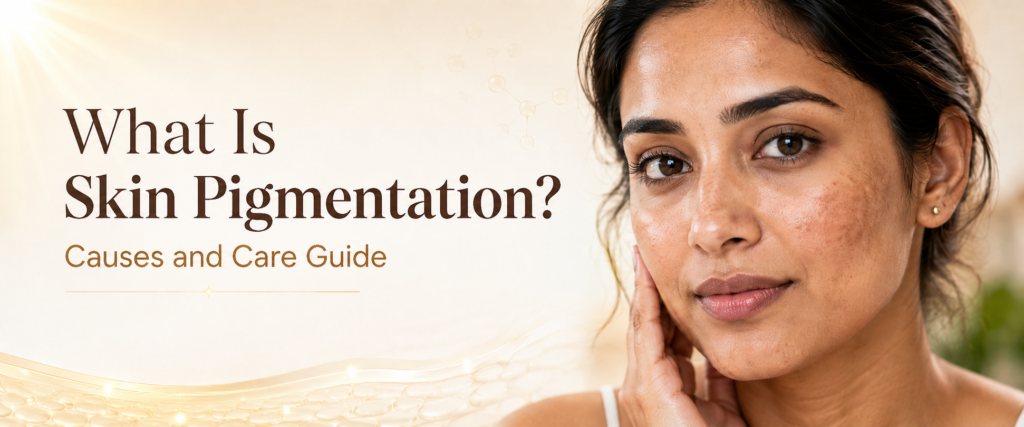
Skin pigmentation is one of the most common skin concerns people notice on their face, neck, hands, and body. It usually appears as dark spots, uneven skin tone, brown patches, tanning, acne marks, or dull-looking skin. For many people, pigmentation is not painful, but it can affect confidence because the skin starts looking uneven and tired.
The honest truth is simple: pigmentation is not just a “beauty problem.” It is your skin reacting to sun exposure, inflammation, hormones, acne, injury, or irritation. The right care can improve it, but random creams, harsh scrubs, and DIY hacks can make it worse.
At Devriz Healthcare, we focus on understanding the root cause first, because every pigmentation case is different.
What Is Skin Pigmentation?
Skin pigmentation refers to the natural color of your skin. This color mainly comes from melanin, a pigment produced by skin cells called melanocytes. When melanin production becomes uneven or excessive in certain areas, the skin may develop darker patches, spots, or uneven tone. This condition is commonly called hyperpigmentation. Cleveland Clinic describes hyperpigmentation as a condition where some areas of skin become darker than others due to extra melanin.
In simple words, pigmentation happens when your skin produces more color in some areas than it should.
Pigmentation can appear as:
- Dark spots
- Brown patches
- Acne marks
- Sun spots
- Melasma patches
- Tanning
- Uneven tone
- Pigmented lips, neck, underarms, or body areas
Not all pigmentation is the same, and treating all types with the same cream is a mistake.
Common Types of Skin Pigmentation
1. Hyperpigmentation
This is the most common form. It happens when certain areas of the skin become darker due to excess melanin. It may occur after sun exposure, acne, burns, cuts, inflammation, or skin irritation.
2. Melasma
Melasma usually appears as brown or grey-brown patches, often on the cheeks, forehead, upper lip, or nose. It is commonly linked with hormonal changes, pregnancy, birth control pills, genetics, and sun exposure. Sun protection is one of the most important steps in managing melasma.
3. Post-Inflammatory Hyperpigmentation
This type appears after inflammation or injury. Acne marks are the most common example. After a pimple heals, it may leave a brown, red, or dark spot behind.
This is why popping pimples is a bad idea. You may remove the pimple temporarily, but you can create a mark that lasts much longer.
4. Sun Spots
Sun spots appear due to long-term sun exposure. They are common on the face, hands, neck, shoulders, and arms. UV exposure stimulates melanin production and can worsen existing pigmentation. A 2023 review notes sun exposure as one of the most frequent causes of hyperpigmentation.
5. Tanning
Tanning is also a pigmentation response. When your skin is exposed to the sun, it produces more melanin to protect itself. Repeated tanning can make the skin look dull, uneven, and darker.
Main Causes of Skin Pigmentation
1. Sun Exposure
This is the biggest trigger. UV rays stimulate melanin production. If you already have dark spots, sun exposure can make them darker and harder to fade.
Skipping sunscreen while using brightening products is pointless. You cannot fight pigmentation properly while letting the sun trigger it daily.
2. Acne and Pimples
Acne often leaves dark marks after healing. These marks are not always scars; many are pigmentation spots caused by inflammation. Picking, squeezing, or aggressively scrubbing acne increases the risk of pigmentation.
3. Hormonal Changes
Hormonal changes can trigger melasma, especially in women. Pregnancy, oral contraceptives, hormonal therapy, and thyroid-related issues may contribute in some cases. Melasma often needs long-term care because it can return easily with sun exposure and heat.
4. Skin Irritation
Harsh skincare products, over-exfoliation, steroid creams, bleaching creams, and random home remedies can damage the skin barrier. Once the barrier is irritated, pigmentation can worsen.
This is where many people create their own problem: they try too many products too quickly.
5. Inflammation or Injury
Cuts, burns, waxing irritation, shaving bumps, insect bites, rashes, and allergic reactions can leave pigmented marks after healing.
6. Heat and Visible Light
For conditions like melasma, not only UV rays but also visible light and heat may worsen pigmentation. Dermatology sources recommend tinted sunscreen with iron oxides for better protection against visible light in pigmentation-prone skin.
7. Genetics and Skin Type
Some people are naturally more prone to pigmentation. Indian skin tones, especially medium to deeper skin tones, can develop post-inflammatory pigmentation more easily after acne, irritation, or sun exposure.
Symptoms of Skin Pigmentation
Pigmentation may show as:
- Brown or black spots
- Uneven skin tone
- Dark patches on cheeks or forehead
- Dark acne marks
- Pigmented upper lip area
- Tanned face, neck, or hands
- Dull and patchy skin
- Dark neck, underarms, elbows, or knees
Pigmentation is usually not painful. But if the patch is changing quickly, bleeding, itching severely, becoming irregular, or looking unusual, it should be checked by a doctor.
How to Care for Pigmentation
1. Use Sunscreen Daily
This is non-negotiable. Sunscreen is the base of pigmentation care. Without sunscreen, dark spots can keep returning.
Use:
- Broad-spectrum sunscreen
- SPF 30 or higher
- Daily application
- Reapplication when outdoors
- Tinted sunscreen if melasma or visible-light sensitivity is suspected
The American Academy of Dermatology says effective treatment for dark spots begins with sunscreen, and recommends SPF 30 or higher with broad-spectrum protection.
2. Stop Harsh Scrubbing
Scrubbing does not remove pigmentation from inside the skin. It only irritates the surface. If your skin becomes red, burning, or sensitive after scrubbing, you are damaging your barrier.
A damaged barrier means more inflammation, and more inflammation can mean more pigmentation.
3. Treat Acne Early
If acne is causing marks, only treating the marks is incomplete. You need to control active acne first. Otherwise, new pimples will keep creating new dark spots.
4. Use Brightening Ingredients Carefully
Some ingredients commonly used for pigmentation care include:
- Niacinamide
- Vitamin C
- Azelaic acid
- Alpha arbutin
- Kojic acid
- Retinoids
- Tranexamic acid
- Licorice extract
But do not randomly layer everything. Too many actives can irritate the skin and worsen pigmentation.
5. Keep the Skin Barrier Healthy
A healthy barrier helps your skin recover better. Use a gentle cleanser, lightweight moisturizer, and sunscreen consistently.
Basic routine matters more than a complicated routine.
6. Avoid DIY Lemon, Baking Soda, and Toothpaste
These are not skincare treatments. Lemon can irritate the skin and increase photosensitivity. Baking soda can disturb skin pH. Toothpaste can burn or irritate the skin.
These hacks are cheap, but the damage can become expensive.
Basic Skincare Routine for Pigmentation
Morning Routine
- Gentle cleanser
- Brightening serum, if suitable
- Moisturizer
- Sunscreen SPF 30 or above
Night Routine
- Gentle cleanser
- Targeted pigmentation treatment
- Moisturizer
This routine should be customized according to your skin type. Oily acne-prone skin, dry sensitive skin, melasma-prone skin, and post-acne pigmentation do not need the same routine.
What Not to Do in Pigmentation
Avoid these mistakes:
- Do not use steroid-mixed fairness creams.
- Do not apply multiple active serums together without guidance.
- Do not skip sunscreen.
- Do not scrub pigmentation aggressively.
- Do not pop pimples.
- Do not expect overnight results.
- Do not copy someone else’s prescription.
- Do not keep changing products every week.
Pigmentation care needs consistency. If you are impatient, you will keep restarting and never see proper improvement.
When Should You Consult a Skin Expert?
You should consider a professional consultation if:
- Pigmentation is increasing
- Dark spots are not improving
- You have melasma-like patches
- Acne marks keep coming back
- Skin is burning or irritated
- You used harsh creams earlier
- Pigmentation is affecting confidence
- You are confused about which products to use
At Devriz Healthcare, our online skin consultation helps identify the concern properly and guide you with a personalized plan based on your skin condition.
Can Pigmentation Be Removed Permanently?
This depends on the cause. Some post-acne marks can fade with proper care. Melasma is more stubborn and can come back if triggers are not controlled. Sun spots may need professional treatment depending on depth.
The blunt answer: pigmentation cannot be fixed properly if you keep ignoring sunscreen, picking acne, and using random creams.
A realistic goal is:
- Reduce dark spots
- Even out skin tone
- Prevent new pigmentation
- Improve skin health
- Maintain results with proper care
Devriz Healthcare Approach to Pigmentation
At Devriz Healthcare, we do not believe in one-product-fits-all solutions. Pigmentation can happen due to acne, sun exposure, hormones, melasma, tanning, or inflammation. That is why the cause must be understood before suggesting care.
Our online consultation process helps with:
- Skin concern analysis
- Pigmentation type understanding
- Doctor-guided care suggestions
- Personalized skincare routine
- Safe product guidance
- Follow-up-focused skin improvement
Your skin does not need random experiments. It needs the right diagnosis and consistent care.
FAQs About Skin Pigmentation
1. Is skin pigmentation dangerous?
Most pigmentation is harmless, but sudden, unusual, painful, bleeding, or rapidly changing patches should be checked by a doctor.
2. Can sunscreen reduce pigmentation?
Sunscreen helps prevent pigmentation from getting darker and supports treatment results. It is one of the most important steps in pigmentation care.
3. How long does pigmentation take to fade?
Mild pigmentation may improve in a few months with consistent care. Deeper or hormonal pigmentation can take longer and may need professional treatment.
4. Is melasma the same as pigmentation?
Melasma is a type of hyperpigmentation. It usually appears as symmetrical brown patches and is often linked with hormones, sun exposure, and genetics.
5. Can acne marks fade naturally?
Some acne marks can fade with time, but repeated acne, picking, and sun exposure can make them darker and longer-lasting.
6. Which cream is best for pigmentation?
There is no single best cream for everyone. The right treatment depends on your pigmentation type, skin type, sensitivity, acne history, and trigger factors.
Final Words
Skin pigmentation is common, but treating it blindly is where most people go wrong. Dark spots, melasma, tanning, and acne marks all need different care. The foundation is always the same: protect your skin from the sun, avoid irritation, keep your routine consistent, and get expert guidance when pigmentation is stubborn.
For safe and personalized pigmentation care, book an online skin consultation with Devriz Healthcare and understand what your skin actually needs.