
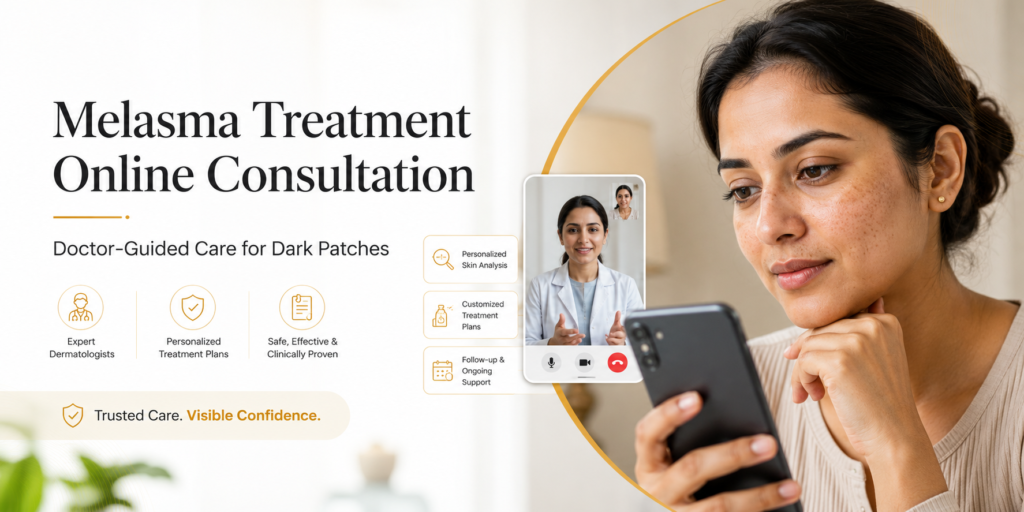
Dark patches on the face can be frustrating, especially when they keep coming back even after using multiple creams, home remedies, or expensive skincare products. One of the most common reasons behind brown or grey-brown patches on the face is melasma. It usually appears on the cheeks, forehead, upper lip, nose, or chin and often becomes more visible after sun exposure.
This is where melasma treatment online consultation can help. Instead of randomly trying products, you can get your skin concern checked by a professional and receive a personalized plan based on your skin type, pigmentation level, lifestyle, and triggers.
At Devriz Healthcare, the focus is simple: understand your skin first, then guide you with the right care. Melasma is not something that should be treated blindly. It needs patience, consistency, sun protection, and a doctor-guided approach.
What Is Melasma?
Melasma is a common skin pigmentation condition where dark patches develop on the face due to excess melanin production. Melanin is the natural pigment that gives color to your skin, hair, and eyes. When melanin production becomes uneven in some areas, it can create visible patches.
Melasma is more common in women, but men can also experience it. It is often linked with sun exposure, hormonal changes, genetics, heat, and skin sensitivity. Many people confuse melasma with normal tanning or dark spots, but melasma usually appears in symmetrical patches and can be stubborn if not managed properly.
The biggest mistake people make is treating melasma like normal pigmentation. Melasma needs a more careful plan because harsh products, wrong creams, or poor sunscreen use can make it worse.
Common Signs of Melasma
Melasma usually does not cause pain, itching, or swelling. The main concern is visible pigmentation. You may notice:
- Brown or grey-brown patches on the face
- Dark patches on cheeks, forehead, nose, upper lip, or chin
- Uneven skin tone
- Pigmentation that gets darker after sunlight exposure
- Patches that appear slowly over time
- Pigmentation that does not improve with normal skincare
- Dark areas that return even after fading
For many people, melasma becomes more noticeable in summer or after long outdoor exposure. Some people also notice it after pregnancy, hormonal medication, or lifestyle changes.
What Causes Melasma?
Melasma does not have only one cause. It usually happens because of multiple internal and external triggers. That is why a proper skin pigmentation consultation is important.
1. Sun Exposure
Sunlight is one of the biggest triggers for melasma. UV rays and visible light can stimulate melanin production and make dark patches more visible. Even if you are using treatment products, poor sun protection can reduce results.
2. Hormonal Changes
Hormonal changes during pregnancy, birth control use, or hormonal imbalance can trigger melasma. This is why melasma is sometimes called “pregnancy mask,” especially when it appears during or after pregnancy.
3. Genetics
If someone in your family has melasma or pigmentation-prone skin, your chances may be higher. Genetic tendency can make melasma more stubborn and recurring.
4. Heat Exposure
Heat from cooking, direct sunlight, outdoor work, or even frequent hot environments can aggravate melasma in some people. This is often ignored, but heat can be a major trigger.
5. Wrong Skincare Products
Harsh scrubs, bleaching creams, steroid-based creams, and random whitening products can damage the skin barrier. Once the skin becomes irritated, pigmentation may get worse.
6. Skin Inflammation
Acne, irritation, allergic reactions, or over-exfoliation can cause inflammation. In pigmentation-prone skin, inflammation can leave behind dark patches or worsen existing melasma.
Why Random Creams Can Make Melasma Worse
A lot of people start with the wrong approach. They see dark patches and immediately buy a “fairness cream,” “pigmentation cream,” or “instant glow cream.” This is risky.
Melasma is not a simple fairness issue. It is a pigmentation disorder that needs proper evaluation. Random creams can cause:
- Skin irritation
- Redness or burning
- Barrier damage
- More sensitivity to sunlight
- Steroid-related side effects
- Pigmentation rebound
- Worsening of dark patches
The harsh truth is this: if you are using random creams without knowing your skin type and pigmentation depth, you may be making your melasma harder to treat.
This is why melasma treatment online consultation is a smarter first step. You get guidance before using active ingredients on your face.
How Online Consultation Helps in Melasma Treatment
Online consultation makes the process easier, especially for people who cannot visit a clinic physically or want quick guidance from home. With a proper online dermatologist consultation for melasma, your skin concern can be reviewed through photos, history, and symptoms.
A typical online consultation may include:
- Sharing your skin concern
- Uploading clear face photos
- Discussing when pigmentation started
- Identifying triggers like sun, hormones, pregnancy, or skincare misuse
- Understanding your current routine
- Checking your skin type
- Creating a personalized skincare plan
- Follow-up to track improvement
The main benefit is that you stop guessing. You understand what your skin actually needs.
Melasma Treatment Online Consultation with Devriz Healthcare
At Devriz Healthcare, the approach is consultation-first. That means the goal is not to push random products but to understand your skin concern properly and guide you with a suitable plan.
For melasma, every person’s skin behaves differently. Some people have oily skin, some have dry or sensitive skin, and some have acne along with pigmentation. A single cream cannot work the same way for everyone.
Through melasma treatment online consultation, Devriz Healthcare helps you get a personalized skin plan based on:
- Your skin type
- Melasma location
- Pigmentation severity
- Sun exposure level
- Current skincare routine
- Past product usage
- Skin sensitivity
- Lifestyle factors
- Treatment history
This type of guided care is more practical than buying multiple products and hoping something works.
What Can Be Included in a Doctor-Guided Melasma Plan?
A melasma plan should be balanced. It should not only focus on lightening pigmentation but also on protecting the skin and preventing triggers.
A doctor-guided melasma skincare routine may include:
Gentle Cleanser
A mild cleanser helps clean the skin without damaging the barrier. Harsh face washes can make skin dry, irritated, and more sensitive.
Sunscreen
Sunscreen is non-negotiable in melasma. Without proper sun protection, pigmentation can return or become darker.
Pigmentation-Support Ingredients
Depending on your skin condition, a professional may suggest ingredients that help support pigmentation control. These should be selected carefully because not every active ingredient suits every skin type.
Night Routine
Night skincare may include repair and pigmentation-support steps. However, strong actives should be used only with proper guidance.
Barrier Repair
If your skin barrier is damaged, direct pigmentation treatment may irritate the skin. In such cases, barrier repair becomes important before using strong actives.
Lifestyle Guidance
Avoiding excess heat, direct sun exposure, and harsh skincare habits can support better results.
Importance of Sunscreen in Melasma Treatment
If there is one thing you cannot skip in melasma, it is sunscreen. Many people use pigmentation creams at night but ignore sunscreen in the morning. That is a major mistake.
Melasma is highly sun-sensitive. Even a good treatment plan may fail if your skin keeps getting exposed to sunlight without protection. Sunscreen helps reduce further darkening and supports the results of your pigmentation routine.
For melasma-prone skin, sunscreen should usually be:
- Broad-spectrum
- Suitable for your skin type
- Comfortable for daily use
- Reapplied when needed
- Used even on cloudy days
- Combined with physical protection like caps, scarves, or shade
Some people may also need tinted sunscreen depending on their skin type and light sensitivity. The right sunscreen choice should be based on professional guidance.
Ingredients Commonly Used for Pigmentation Support
There are several ingredients commonly used in pigmentation and melasma skincare. However, they should not be used blindly. Some ingredients can irritate sensitive skin or worsen pigmentation if used incorrectly.
Common pigmentation-support ingredients include:
- Niacinamide
- Alpha arbutin
- Kojic acid
- Vitamin C
- Azelaic acid
- Retinoids
- Tranexamic acid
- Licorice extract
These ingredients may help support uneven tone and pigmentation concerns, but the right choice depends on your skin type, tolerance, and melasma severity. For example, someone with sensitive skin may not tolerate the same active ingredient that works for oily skin.
This is exactly why dermatologist for melasma online consultation can be useful. You get a plan that suits your skin instead of copying someone else’s routine.
Melasma Treatment at Home: What You Should and Shouldn’t Do
Melasma treatment at home is possible when it is guided properly. But self-treatment without knowledge can backfire.
Do These Things
Use sunscreen every day. This is the foundation of melasma care.
Follow a simple routine. Too many products can irritate your skin.
Use doctor-recommended products only. Random combinations can damage your skin barrier.
Protect your face from heat and direct sunlight. Sun and heat can both trigger pigmentation.
Be consistent. Melasma does not improve overnight.
Take follow-up seriously. Your routine may need adjustment depending on progress.
Avoid These Mistakes
Do not use steroid creams without doctor advice.
Do not apply random bleaching creams.
Do not scrub your face aggressively.
Do not overuse exfoliating acids.
Do not stop sunscreen after pigmentation starts fading.
Do not expect instant results.
Melasma needs discipline. If you keep changing products every week, your skin will stay confused and irritated.
How Long Does Melasma Treatment Take?
Melasma treatment takes time. There is no honest way to promise overnight results. Improvement may take weeks to months depending on your skin type, pigmentation depth, triggers, and consistency.
Some people start noticing gradual improvement with proper care, while others may need long-term maintenance. Melasma can also come back if triggers are not controlled.
The goal should not be “instant fairness.” The goal should be:
- Reducing visible pigmentation
- Controlling triggers
- Protecting skin from further darkening
- Improving overall skin tone
- Maintaining results with the right routine
A realistic approach works better than chasing quick fixes.
Who Should Book an Online Dermatologist Consultation for Melasma?
You should consider melasma treatment online consultation if you have:
- Dark patches on cheeks or forehead
- Pigmentation on upper lip or nose
- Brown patches that become darker after sunlight
- Melasma after pregnancy
- Uneven skin tone that is not improving
- Sensitive skin with pigmentation
- Pigmentation after using wrong products
- Confusion about which skincare product to use
- Recurrent pigmentation even after treatment
- Dark patches that are affecting your confidence
If you are not sure whether it is melasma, tanning, acne marks, or another pigmentation concern, consultation becomes even more important.
Why Choose Devriz Healthcare for Melasma Treatment Online Consultation?
Devriz Healthcare is built for people who want doctor-guided skin consultation from home. For concerns like melasma, this approach makes sense because you need proper evaluation before treatment.
Here is why Devriz Healthcare can be a practical choice:
Doctor-Guided Consultation
Your concern is reviewed with a more structured approach instead of random product guessing.
Personalized Skin Plan
The recommendation is based on your skin type, concern, and pigmentation level.
Convenient Online Process
You can start from home without waiting for a clinic visit.
Suitable for Indian Skin Concerns
Indian skin is more prone to pigmentation and post-inflammatory marks, so treatment must be selected carefully.
Follow-Up Support
Melasma needs tracking. Follow-up helps understand whether the routine is working or needs adjustment.
No Random Skincare Guessing
You save time, money, and skin damage by avoiding unnecessary product trials.
Common Myths About Melasma
Myth 1: Melasma Is Just Tanning
No. Tanning and melasma are different. Melasma is a pigmentation condition that can be triggered by sun exposure, hormones, heat, and genetics.
Myth 2: Fairness Creams Can Remove Melasma
Most fairness creams are not designed for melasma. Some may even irritate the skin or worsen pigmentation.
Myth 3: Melasma Goes Away Permanently with One Cream
Melasma can be recurring. It often needs long-term care, sun protection, and maintenance.
Myth 4: Sunscreen Is Needed Only Outdoors
Wrong. Sunlight through windows and visible light exposure may also affect pigmentation-prone skin. Daily sunscreen is important.
Myth 5: Stronger Products Mean Faster Results
Not always. Strong products can irritate the skin. Irritation can make pigmentation worse.
FAQs About Melasma Treatment Online Consultation
1. What is melasma?
Melasma is a common skin pigmentation concern where brown or grey-brown patches appear on the face. It usually affects areas like the cheeks, forehead, nose, upper lip, and chin. It happens due to excess melanin production and can be triggered by sun exposure, hormones, heat, genetics, or wrong skincare use.
2. Can melasma be treated through online consultation?
Yes, melasma can be evaluated through online consultation by checking your skin concern, clear face photos, medical history, skincare routine, and trigger factors. Based on this, a doctor-guided skincare plan can be suggested. However, severe cases may require in-clinic procedures depending on professional advice.
3. Is melasma permanent?
Melasma can be long-term and may come back if triggers like sun exposure, heat, hormonal changes, or poor skincare are not controlled. It may not always disappear permanently, but with proper sunscreen, consistent skincare, and doctor-guided treatment, visible pigmentation can be managed and reduced.
4. What causes melasma on the face?
The most common causes of melasma include sun exposure, hormonal changes, pregnancy, birth control pills, genetics, heat exposure, skin inflammation, and use of harsh or unsuitable skincare products. In many cases, more than one trigger may be responsible.
5. Which areas of the face are commonly affected by melasma?
Melasma commonly appears on the cheeks, forehead, nose bridge, upper lip, chin, and sometimes the jawline. Many people notice symmetrical dark patches on both sides of the face, especially on the cheeks and forehead.
6. Why is sunscreen important in melasma treatment?
Sunscreen is one of the most important steps in melasma treatment because sun exposure can make pigmentation darker and more stubborn. Even if you use good pigmentation products, skipping sunscreen can reduce results and cause melasma to return.
7. Can I use home remedies for melasma?
Home remedies are not always safe for melasma. Ingredients like lemon, baking soda, toothpaste, or harsh scrubs can irritate the skin and make pigmentation worse. Melasma needs a careful, skin-type-based approach, so doctor-guided care is safer than random home remedies.
8. How long does melasma treatment take?
Melasma treatment takes time. Visible improvement may take several weeks to months depending on your skin type, pigmentation severity, sun exposure, hormonal factors, and consistency with the skincare routine. There is no safe overnight solution for melasma.
9. What should I avoid if I have melasma?
If you have melasma, avoid direct sun exposure, skipping sunscreen, harsh scrubbing, random fairness creams, steroid creams without prescription, over-exfoliation, and frequently changing skincare products. These habits can irritate the skin and worsen pigmentation.
10. Why choose Devriz Healthcare for melasma treatment online consultation?
Devriz Healthcare provides doctor-guided online consultation for skin concerns like melasma, pigmentation, dark patches, and uneven skin tone. The consultation helps you understand your skin type, possible triggers, and suitable skincare plan instead of randomly trying products.
Conclusion
Melasma is not a simple dark spot problem. It is a stubborn pigmentation condition that needs the right diagnosis, daily sun protection, consistent skincare, and professional guidance. Random creams, harsh home remedies, and careless product use can make the condition worse.
If you are dealing with brown patches, melasma on cheeks, pigmentation on the upper lip, or uneven skin tone, melasma treatment online consultation can help you take the right first step.
With Devriz Healthcare, you can get doctor-guided online consultation and a personalized skin plan based on your concern, skin type, and pigmentation level.
Book your melasma treatment online consultation with Devriz Healthcare and start your skin journey with the right guidance instead of random guessing.